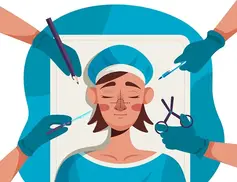
What Is a Brow Lift?
A brow lift raises the eyebrows to a more youthful position and smooths the horizontal lines and frown lines of the forehead. With age, the forehead skin loses elasticity and the eyebrows gradually sink, especially at the outer ends. This makes you look tired, sad, or even angry when you are not, and it causes the upper eyelids to look heavy. Many people are surprised to learn that a lot of what looks like "extra eyelid skin" is really a low eyebrow.
At Aakar Aesthetics in Nashik, Dr. Kiran Nerkar designs the brow lift to open the eyes and restore a relaxed, natural expression. The aim is subtle: a lifted brow should look like yours on a good day, never surprised.
Who Is a Good Candidate?
- Sagging or low eyebrows, particularly outer hooding.
- Deep horizontal forehead lines or frown lines between the eyebrows.
- Heavy upper eyelids where the brow is part of the problem.
- A tired or angry appearance despite feeling well.
- Facial nerve weakness or injury causing a brow droop (functional brow lift).
Candidates are typically 40 or older, but younger patients with brow asymmetry or trauma may also benefit. As with all surgery, good general health and not smoking are important.
Age-Related Considerations and Timing
Brow position changes gradually over decades, which means the "right time" for a brow lift is different for every patient and has more to do with the degree of change than with a specific birthday. Patients in their late 30s and early 40s sometimes notice early outer-brow hooding, particularly if it runs in the family, and may benefit from a smaller, more limited lift, while patients in their 50s and 60s with more advanced sagging and deeper forehead lines often need a more complete technique. There is no fixed cut-off age for brow lift surgery; general health, skin quality and realistic expectations matter more than age on its own. Because the brow interacts so closely with the upper eyelids, many surgeons reassess brow position again whenever a patient is considering eyelid surgery, even years after an initial consultation, since the balance between the two areas can shift over time.
Common Myths About Brow Lift Surgery
- Myth: A brow lift always leaves you looking surprised. This look results from over-elevating the brow, not from the procedure itself. A conservative, well-planned lift raises the brow only enough to restore a natural, relaxed position.
- Myth: Botox and a surgical brow lift do the same thing. Botulinum toxin relaxes specific muscles and can offer a mild, temporary lift and softening of lines, but it cannot reposition skin and soft tissue that has genuinely descended, which is what surgery addresses directly.
- Myth: The scars are highly visible. Endoscopic techniques use several small incisions hidden behind the hairline, and even longer incision techniques are placed carefully within or along the hairline specifically to keep them concealed.
- Myth: A brow lift is only about wrinkles. While it does soften horizontal forehead lines and frown lines, the primary structural goal is repositioning the brow itself, with smoother skin as a secondary benefit of relaxing the tissue that was previously being pulled downward.
- Myth: Only women have brow lifts. Men with a heavy, low brow or brow asymmetry after injury are also good candidates, and the technique is adjusted to preserve a naturally flatter, lower male brow position rather than creating an arched, feminised look.
Brow Lift Techniques
- Endoscopic brow lift: several small incisions behind the hairline allow the brow to be lifted with an endoscope, leaving minimal scars. It suits patients with a normal forehead height.
- Temporal (lateral) brow lift: lifts the outer brow through incisions in the temple hair, ideal for outer hooding.
- Coronal or pretrichial brow lift: a longer incision across the top of the head or along the hairline. It allows the forehead height to be shortened or maintained, and suits patients with a high forehead or heavy brow drop.
- Direct brow lift: an incision just above the brow removes a strip of skin. It is used in selected cases such as facial paralysis or heavy brows in men, though the scar is more visible.
- Non-surgical brow lift: botulinum toxin can subtly raise the brow and soften lines for a few months, and is an option for mild cases.
Preparing for Your Brow Lift Consultation
A brow lift consultation should assess your forehead height, hairline, brow shape and the degree of drop at rest and during expression, alongside a look at your upper eyelids, since the two areas are so closely linked. To make the most of your visit, it can help to bring photographs of yourself from several years ago for comparison, and to think about whether forehead lines, brow position, or heavy eyelids bother you most, since this affects which technique is recommended.
Questions worth raising at consultation include:
- Which technique suits my forehead height and hairline, and why?
- Should my eyelids be assessed or treated at the same time?
- How will the incisions be hidden given my hair density and hairline?
- What sensation changes, such as numbness or itching, should I expect and for how long?
- Is my case suited to a non-surgical option first, or has my brow drooped enough that surgery is the more appropriate step?
Brow Lift or Eyelid Surgery First?
When both brow and eyelids are involved, sequence matters. Lifting the brow first shows how much eyelid skin remains. Removing eyelid skin without correcting a low brow can drag the brow further down and leave the eyes looking tight or hollow. Dr. Nerkar assesses both together and often recommends combining brow lift and blepharoplasty for balanced rejuvenation.
The Procedure and Recovery
A brow lift takes about one to two hours under general anaesthesia or sedation with local anaesthesia. Most patients go home the same day.
- Days 1-3: swelling and possible bruising of the forehead and eyelids, and mild headaches. Sleep with the head raised.
- Days 7-14: stitches or staples are removed. Most people return to work at around 10 days, using hairstyles or makeup to conceal early signs.
- Weeks 2-6: swelling subsides. Numbness or itching of the forehead and scalp is common and improves over weeks to months.
- Months 3-6: final position and contour become clear.
Avoid strenuous exercise for around four weeks, and avoid smoking, since it interferes with healing.
Supporting a Smooth Recovery
Everyday habits in the weeks after a brow lift can influence both comfort and how quickly you feel confident returning to normal life.
- Hair and scalp care: Gentle, careful washing around incision sites, following your surgeon's specific instructions, keeps the area clean without disturbing healing tissue.
- Sun protection: The forehead and scalp are exposed to sun daily, so a hat and sun avoidance on incision lines in the early months help scars fade well.
- Sleep position: Sleeping with your head elevated in the first week reduces forehead and eyelid swelling and tends to be more comfortable.
- Smoking: As with other facial procedures, nicotine reduces blood flow to healing skin and can slow recovery, so stopping before and after surgery is strongly advised.
- Gradual activity: Avoiding heavy lifting, bending and strenuous exercise for the first few weeks limits swelling and protects the healing incisions from unnecessary strain.
- Patience with numbness: Temporary numbness or itching of the scalp is a normal part of nerve healing after this procedure and typically improves gradually over weeks to months rather than resolving overnight.
Risks
Possible risks include bleeding or haematoma, infection, visible scars, hair loss or thinning at incision lines, forehead numbness, asymmetry, over-elevation and a change in eyebrow movement. Injury to the nerve that raises the eyebrow is rare but can occur. Some of the lift can relax over time. A careful technique and appropriate selection of the procedure reduce these risks.
Non-Surgical Options and When They Are Enough
For patients with only mild brow descent or early forehead lines, botulinum toxin injections can provide a subtle, temporary lift of the outer brow and soften the appearance of horizontal lines, without any downtime. This can be a reasonable choice for someone who wants a gentler, more gradual approach, or who wants to preview the effect of a slightly raised brow before considering surgery. The trade-off is that the effect lasts only a few months and needs to be repeated, and it cannot correct significant tissue descent or the deeper structural sagging that a surgical lift addresses directly. Understanding this distinction helps you choose the option that actually matches how much your brow has changed, rather than under- or over-treating the concern.
How a Low Brow Affects Expression and Confidence
The brow plays an outsized role in how others read our mood, often more than we realise. A low, heavy brow can make a person appear perpetually tired, worried or annoyed, even during ordinary conversation when they feel completely neutral. Patients frequently describe being asked "what's wrong?" or "are you upset?" by colleagues or family when nothing is wrong at all, simply because their resting brow position is being misread as an expression. Restoring a more open brow position can change this daily social experience meaningfully, which is why many patients describe the result of a brow lift in terms of how people respond to them, not only in terms of how they look in the mirror. As with all facial surgery, the goal is a natural, appropriately subtle change rather than a dramatically different expression.
Follow-Up Care After a Brow Lift
Following the early visit for stitch or staple removal at around one to two weeks, most patients are reviewed again over the following weeks and months to confirm that swelling is settling symmetrically, that scalp numbness is improving as expected, and that the brow position is stable. A further check once healing has matured, typically by three to six months, confirms the final result. Keeping these appointments allows any asymmetry or slower-than-expected healing to be identified early. Between visits, contact the clinic promptly if you notice sudden or one-sided swelling, spreading redness, fever, or a sudden change in forehead sensation, rather than waiting for the next scheduled review.
Brow Lift Cost in Nashik
The cost depends on the technique chosen, whether it is combined with eyelid surgery or a facelift, anaesthesia and facility charges. After your consultation, our team will provide an estimate in writing.
Brow Lift and Chin Augmentation: Facial Balance
Aakar Aesthetics lists brow lift and chin augmentation together because both are about proportion. A raised brow frames the eyes, and a well-projected chin balances the profile. Many patients discover that a small change in one area makes a bigger difference to the whole face than a large change in another. Dr. Nerkar reviews your full face when planning.
Brow Lift: Frequently Asked Questions
Will a brow lift make me look surprised?
Not if it is done conservatively. The goal is a natural brow position that matches your face and gender.
Is there visible scarring?
Endoscopic incisions hide behind the hairline and are barely visible. Other techniques leave a longer scar along or within the hairline.
How long does a brow lift last?
Results commonly last many years, but ageing continues. Some settling in the first months is normal.
Can Botox give the same result as a surgical brow lift?
Botulinum toxin can give a mild lift and soften lines for a few months, but it does not replace surgery when the brow has sagged significantly.
Does a brow lift hurt?
You will be asleep or sedated during the procedure. Afterwards, you can expect tightness, mild pain and numbness, which are controlled with medication.
Can men have a brow lift?
Yes. The technique is adjusted to keep a flatter, lower brow position, which looks more natural in men.
Curious whether a brow lift, eyelid surgery or both will refresh your look? Book a consultation at Aakar Aesthetics, Nashik