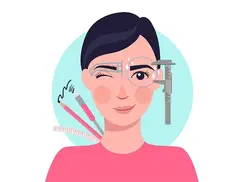
What Is Blepharoplasty?
Blepharoplasty is surgery on the upper eyelids, lower eyelids or both, to remove excess skin, reposition or remove fat, and tighten weak tissue. Over time, the skin of the eyelids stretches, muscles weaken and fat pads bulge, giving a tired or older appearance even in someone who feels rested. For some people, heavy upper eyelids also droop into the field of vision and interfere with daily tasks like driving or reading.
Blepharoplasty is one of the most satisfying facial procedures when it is done with restraint. Dr. Kiran Nerkar at Aakar Aesthetics, Nashik, focuses on a refreshed, natural look that keeps the eyes expressive, with no "operated" appearance.
Who Benefits from Eyelid Surgery?
- Excess or hanging upper eyelid skin that makes you look tired or older.
- Puffy bulges on the upper or lower lids caused by fat.`
- Bags and loose skin under the eyes.
- Heavy upper eyelids that obstruct the upper field of vision.
- Makeup that no longer sits smoothly on the eyelid.
Good candidates are healthy adults with realistic goals and no serious eye disease. Everybody undergoing eyelid surgery should have a proper eye and lid examination beforehand.
Who Should Wait or Consider Alternatives First
Eyelid surgery is not automatically the right next step for everyone who notices changes around the eyes. Patients with active or poorly controlled dry eye disease, certain thyroid or autoimmune eye conditions, or an uncontrolled general medical condition are usually advised to stabilise these first, since surgery can temporarily worsen dry eye symptoms and healing is better when the body is otherwise well. Patients whose main concern is dark circles from pigmentation rather than true excess skin or fat may also be better served initially by skin-directed treatments, since blepharoplasty corrects structural changes and is not designed to lighten skin pigment. An honest consultation, including a proper eye examination, will clarify which category you fall into before any surgery is planned.
Blepharoplasty vs. Ptosis vs. Brow Ptosis
Not every droopy-looking eyelid is a skin problem. Three different conditions look similar: excess eyelid skin (dermatochalasis), a weak lid-lifting muscle that makes the lid margin sit low (ptosis), and a sagging eyebrow that pushes the lid down (brow ptosis). Each is treated differently. Removing eyelid skin without correcting a drooping brow can leave a heavy, artificially-hollow look, and ptosis needs muscle correction. Dr. Nerkar sorts out the exact cause before proposing surgery, sometimes recommending a brow lift together with or ahead of eyelid surgery.
Common Myths About Eyelid Surgery
- Myth: Eyelid surgery will change how my eyes look shaped. Blepharoplasty removes excess tissue; it does not reshape the eye itself or change your fundamental eye shape, and a skilled surgeon plans the surgery specifically to preserve your natural eye shape and expression.
- Myth: It is only for older patients. While many patients are middle-aged or older, some younger people are born with, or develop earlier than usual, heavy upper lids or under-eye bags that run in the family, and can be reasonable candidates well before the age most people associate with the surgery.
- Myth: Recovery takes a long time. Compared with many facial procedures, eyelid surgery has one of the shorter visible recovery periods, with most people comfortable returning to work with makeup within one to two weeks.
- Myth: It always involves a visible cut. Lower eyelid fat can often be addressed through an incision hidden inside the lid, leaving no visible external scar at all, while upper lid scars sit inside the natural crease and fade well.
Preparing for Your Consultation
Because the eyelids sit so close to the eye itself, a thorough consultation always includes an eye and lid examination, not just a discussion of appearance. It helps to bring a list of any eye conditions, dry eye symptoms, use of contact lenses, and any medicines or supplements that affect bleeding, such as blood thinners or high-dose fish oil.
Useful questions to ask include:
- Is my droopiness caused by excess skin, a weak muscle (ptosis), or a low brow, and how does that change your recommendation?
- Would upper surgery, lower surgery, or both give me the result I am hoping for?
- Do I have any dry eye risk that should be managed before or after surgery?
- Should a brow lift be considered together with, or instead of, eyelid surgery in my case?
- What can I expect for bruising and swelling in the specific days I need to be presentable for work or an event?
Upper and Lower Blepharoplasty
Upper eyelid surgery
An incision is hidden in the natural eyelid crease. Excess skin, and if needed a small amount of muscle and fat, is removed, and the incision is closed with fine stitches. It typically takes 45 to 90 minutes.
Lower eyelid surgery
- Transconjunctival approach: the incision is inside the lower lid with no external scar. It is ideal for fat bags without much loose skin.
- External (subciliary) approach: an incision just under the lashes removes excess skin and tightens the lid when both skin and fat need correction.
- Fat may be removed or repositioned to smooth the tear trough, and the lower lid may be tightened to maintain its shape.
What to Expect: Step by Step
- Consultation: eye and lid assessment, photographs, discussion of medicines and dry-eye history
- Anaesthesia: local anaesthesia with sedation is common, and general anaesthesia may be used in some cases. It is usually a day-care procedure.
- After surgery: cool compresses, head elevation and lubricating eye drops or ointment.
- Sutures are usually removed around day 5 to 7.
What to Expect: Step by Step
- Week 1: swelling and bruising are at their maximum. Eyes may feel tight, dry or sensitive to light. Sunglasses help.
- Week 2: bruising fades. Most people return to work at about 7 to 10 days. Avoid contact lenses for around two weeks, or as your surgeon advises.
- Weeks 3-6: swelling subsides and you can return to exercise.
- Months 2-3: scars mature and fade to a fine line in the lid crease.
Do not rub the eyes. Call us immediately if you notice severe pain, sudden vision change or marked swelling on one side.
Caring for Yourself During Recovery
Because the skin around the eyes is thinner and more delicate than almost anywhere else on the face, small daily habits make a noticeable difference to comfort and healing.
- Cool compresses: Used gently in the first 48 hours, these reduce swelling and bruising and are one of the simplest things you can do yourself at home.
- Eye protection: Sunglasses are useful for more than comfort; they shield healing skin and the eye surface from wind, dust and bright light while sensitivity settles.
- Screen use: Extended reading or screen time can dry and strain the eyes during early healing, so short, frequent breaks are usually more comfortable than long sessions.
- Sleeping position: Sleeping with the head slightly elevated for the first week or so helps limit swelling, similar to advice given after other facial procedures.
- Makeup: Most surgeons advise waiting until sutures are out and the incision has closed before applying eye makeup, to reduce the risk of irritation or infection.
- Sun protection: Once healed, ongoing sun protection for the eyelid skin, including sunglasses with UV protection, helps protect your results and the surrounding skin over the years that follow.
Risks
Serious complications are rare, but risks include temporary dry eyes, asymmetry, difficulty fully closing the eyes for a short time, scarring, a change in lid position (particularly with lower lid surgery), bruising, infection and, very rarely, bleeding behind the eye that can threaten vision. A proper pre-operative assessment, delicate technique and prompt follow-up keep these risks low.
Combining Eyelid Surgery with Other Facial Procedures
Because the eyes are such a central feature, many patients find that eyelid surgery works best as part of a broader plan for the upper face rather than in isolation. It is often combined with, or planned alongside, a brow lift, since a low brow can mimic or worsen the appearance of heavy upper lids, and correcting only the lid without addressing the brow can leave an unbalanced result. It can also be combined with facelift surgery for patients addressing multiple signs of ageing at the same time, which can reduce the total anaesthesia and recovery burden compared with separate operations performed months apart. Whether combining procedures makes sense for you depends on your overall health, the areas that genuinely need correction, and your own preferences about downtime, and this is discussed openly at consultation.
The Confidence Factor
Eyes are one of the first things people notice in a face, and heavy or tired-looking eyelids are frequently misread by others as fatigue, disinterest, or even unhappiness, regardless of how a person actually feels. Many patients describe this as one of the more frustrating aspects of ageing eyelids: being asked repeatedly whether they are tired when they feel perfectly well rested. A well-planned blepharoplasty that opens the eyes without changing their fundamental shape can meaningfully change how approachable and alert a person appears in everyday interactions, which is a common and valid motivation alongside any functional benefit to vision.
Non-Surgical Alternatives and Their Limits
Some patients ask whether injectable treatments, radiofrequency skin tightening, or under-eye fillers can achieve the same result as blepharoplasty. These options can be useful for mild skin quality changes, fine lines, or hollowing under the eyes where the tear trough has become visible due to volume loss rather than fat bulging or excess skin. They do not, however, remove excess upper eyelid skin, cannot correct a lid that is genuinely obstructing vision, and cannot address fat pads that are bulging forward rather than volume that has been lost. For patients whose main concern is skin excess or true fat prominence, surgery remains the option that corrects the structural cause rather than adding volume around it. A careful eye examination at consultation will clarify which category your concern falls into and whether a non-surgical option is a reasonable first step or whether it is unlikely to meet your goals.
Follow-Up Care Schedule
After the early visit to remove sutures around day five to seven, most patients are reviewed again over the following weeks to confirm that swelling is settling evenly and that lid position and closure are normal, with a further check once scars have matured over two to three months. This structured followup allows your surgeon to catch and address any asymmetry or lid-position change while it is still easy to manage. Outside of these scheduled visits, you should contact the clinic without delay if you notice sudden vision changes, severe or worsening pain, or marked swelling that affects one eye much more than the other, since these can occasionally signal a problem that needs prompt attention.
Eyelid Surgery Cost in Nashik
The cost depends on whether you need upper, lower, or all four lids operated on, the technique, anaesthesia, and whether other procedures like a brow lift are combined. Dr. Nerkar's team provides a clear estimate after examination.
Eyelid Surgery (Blepharoplasty): Frequently Asked Questions
Will eyelid surgery change the shape of my eyes?
Blepharoplasty removes excess tissue and refreshes the eyes but does not change the basic shape. Your natural expression is preserved.
Are the scars visible?
Upper eyelid scars sit in the natural crease and are usually barely noticeable. Inside-the-lid lower surgery leaves no visible scar.
How long do the results last?
Upper eyelid results can last for many years, and lower lid results are often longer-lasting. Ageing continues, so appearances change gradually.
Can eyelid surgery improve vision?
If heavy upper eyelids are blocking the upper visual field, removing the excess skin can improve it. Your surgeon will assess this at consultation.
Can I have eyelid surgery with dry eyes?
Mild dry eye is not always a barrier, but it must be assessed first because surgery can make it worse temporarily. Tell your surgeon about any dry-eye symptoms.
Is it safe to combine eyelid surgery with other procedures?
Yes, it is often combined with brow lift, facelift or rhinoplasty, provided the overall procedure time and your health are suitable.
If tired-looking eyelids bother you, book an eyelid assessment at Aakar Aesthetics, Nashik