What Is Rhinoplasty?
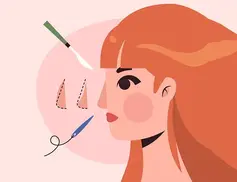
Rhinoplasty, commonly called a nose job, is surgery to change the shape, size or structure of the nose. It can refine the bridge, tip and nostrils, correct injury-related deformity, and open a blocked airway. Because the nose sits at the centre of the face, even small changes alter facial balance. The goal of a good rhinoplasty is not a "perfect nose" copied from a photograph but a nose that suits your face and looks unmistakably natural.
At Aakar Aesthetics, Nashik, rhinoplasty is performed by Dr. Kiran Nerkar, a board-certified plastic and reconstructive surgeon trained at B. J. Medical College, Pune, and MTH, Cochin, Kerala. Each plan is built around your facial proportions, skin type and breathing.
Concerns Rhinoplasty Can Address
- A hump on the nasal bridge or an uneven bridge.
- A broad, bulbous, drooping or overprojected nasal tip.
- A wide nose base or flared nostrils.
- A crooked nose or asymmetry, including after an injury
- A flat or low bridge needing augmentation.
- A deviated septum or narrow airway that makes breathing difficult (functional rhinoplasty with septoplasty).
- Results of previous nasal surgery that need correction (revision rhinoplasty).
Common Myths and Facts About Rhinoplasty
Rhinoplasty is one of the most talked-about cosmetic procedures, and also one of the most misunderstood. A few points are worth clarifying before you decide whether it is right for you.
- Myth: A nose job gives you someone else's nose. In reality, a well-planned rhinoplasty works within your existing bone and cartilage structure, your skin thickness and your other facial features. The aim is a nose that looks like it always belonged on your face, not a copy of a celebrity's nose.
- Myth: Everyone will be able to tell you have had surgery. Subtle, well-executed rhinoplasty is designed to be unnoticeable as "surgery" and noticeable only as a more balanced face. Most people who have had a good rhinoplasty are asked if they have changed their hairstyle or lost weight, not whether they had their nose done.
- Myth: Rhinoplasty is only cosmetic. Many patients have a functional concern, such as a blocked nostril or noisy breathing during sleep, alongside a cosmetic one. Septoplasty and functional rhinoplasty are genuine medical procedures that can meaningfully improve breathing.
- Myth: Recovery takes only a week. External bruising and swelling calm down within two to three weeks, but the nose continues to refine for months, and fine changes at the tip can continue for the best part of a year.
- Fact: Age matters. Facial growth, including growth of the nose, should be essentially complete before elective rhinoplasty is considered, which is one reason surgeons ask about age and growth history at the first visit.
Separating myth from fact early helps you set expectations that match what surgery can realistically achieve, which is one of the biggest factors in long-term satisfaction with the result.
Are You a Good Candidate?
Good candidates are in good general health, have finished facial growth (usually around 17 to 18 years or older), do not smoke, and have realistic expectations. A detailed assessment also checks the quality of your nasal skin. Thick, oily skin can hide fine tip definition and is slower to lose swelling, and thin skin shows every irregularity, so the planned changes must respect what your skin can display.
If your main concern is breathing, an ENT-style nasal assessment is part of the evaluation. Not every blocked nose needs rhinoplasty, and it is better to know that before deciding on surgery.
Rhinoplasty is not right for everyone, and a good surgeon will say so plainly. Patients with unrealistic goals, those who are still growing, those who are unwell or unstable medically, and those whose main concern is something rhinoplasty cannot fix, such as skin texture or overall facial symmetry unrelated to the nose, may be better served by waiting, by a different treatment, or simply by a longer conversation before deciding. If you are unsure whether surgery is the right step, it is entirely reasonable to have an initial consultation purely to understand your options without any commitment to proceed.
Preparing for Your Consultation
A rhinoplasty consultation works best when both sides come prepared. Bringing clear photographs of your nose from the front, side and three-quarter angles in good light helps the surgeon understand your starting point, and thinking through your goals in your own words, rather than only reference images, helps communicate what actually bothers you about your nose.
Some useful questions to raise at your consultation include:
- What specifically can and cannot be changed given my skin thickness and bone and cartilage structure?
- Will an open or closed technique be used, and why?
- Do I have a breathing problem that should be addressed at the same time?
- How many procedures like mine have you performed, and can I understand your general approach and philosophy?
- What is the expected recovery, including time off work and any activity restrictions?
- What happens if I am not fully satisfied with an aspect of the result once healing is complete?
Writing your questions down beforehand, and bringing a list rather than relying on memory during the appointment, tends to lead to a more useful and less rushed conversation.
Your Consultation and Planning
- A full history, including previous nasal injury, allergies and medicines.
- Nasal examination, including internal structures and breathing.
- Photographs from several angles and a discussion of your goals, with a look at how the nose relates to your forehead, cheeks and chin. Sometimes a small chin adjustment improves the appearance of the nose more than a change in the nose itself.
- A clear explanation of what is achievable and what is not.
Open and Closed Rhinoplasty
- Open rhinoplasty: a tiny incision across the columella (the strip between the nostrils) plus internal incisions. It gives the surgeon a full view and is often chosen for complex tips, revisions and grafting.
- Closed rhinoplasty: all incisions are inside the nose, with no external cut. It suits selected cases with limited change and can mean less swelling.
Neither is better in every case. The choice depends on your anatomy and the changes planned, and Dr. Nerkar will explain his recommendation.
What Happens During Surgery
Rhinoplasty is usually performed under general anaesthesia and takes around one and a half to three hours, depending on complexity. Most patients go home the same day or after an overnight stay.
- Bones and cartilage are reshaped: the hump is reduced, the bridge narrowed or built up, and the tip refined with sutures or cartilage grafts.
- If breathing is a concern, the septum is straightened (septoplasty) and the turbinates may be reduced.
- Cartilage for grafting usually comes from the nasal septum, and occasionally from the ear or rib.
- The skin is redraped, the incisions are closed, and a splint is placed to protect the new shape.
Recovery Timeline
- Days 1-3: swelling and bruising around the eyes; head elevated; light nasal packing or splints if used.
- Day 7: splint and stitches are usually removed.
- Weeks 1-2: bruising fades. Most people return to desk work after 7 to 10 days. Avoid blowing your nose.
- Weeks 3-6: most obvious swelling settles. Avoid strenuous exercise, contact sport, and resting glasses on the nose for about 4 to 6 weeks.
- Months 3-12: fine swelling, especially at the tip, continues to settle. The final shape is usually judged at around 12 months.
Every patient heals differently, and your surgeon will advise you at follow-up visits.
Lifestyle Factors That Support Healing
How you look after yourself before and after rhinoplasty has a real effect on how smoothly you heal and how quickly swelling settles.
- Smoking: Nicotine narrows blood vessels and reduces blood flow to healing tissue, which can slow recovery and increase the risk of complications. Stopping smoking well before surgery, and staying stopped afterwards, is one of the most important things you can do for your own result.
- Sun exposure: Nasal skin that has just been reshaped is more sensitive to sun and can develop prolonged discolouration if it is sunburned during healing. Wearing a hat and, once your surgeon says it is safe, a sunscreen suited for healing skin protects your result.
- Sleeping position: Sleeping with your head elevated for the first couple of weeks reduces swelling and is generally more comfortable while the nose is tender.
- Nutrition and hydration: A balanced diet with adequate protein and plenty of fluids supports normal wound healing, in the same way it supports recovery from any surgery.
- Activity: Strenuous exercise, bending and heavy lifting raise blood pressure in the face and can increase swelling or bleeding risk in the early weeks, which is why a gradual return to activity is generally recommended rather than resuming everything at once.
- Glasses and contact sports: Anything that rests weight on the bridge of the nose, or risks a knock to the face, should be avoided until your surgeon confirms the nose has healed enough to tolerate it.
Risks and Safety
Rhinoplasty is a safe operation in experienced hands, but it is a delicate one. Risks include bleeding, infection, breathing difficulty, asymmetry, contour irregularities, numbness, prolonged swelling, an unsatisfactory appearance, and the need for revision surgery. Anaesthesia has its own risks, which are reviewed before surgery. Choosing a properly trained plastic surgeon, following aftercare and not smoking all reduce your risk.
Non-Surgical Alternatives and Their Limits
Non-surgical "liquid rhinoplasty" using injectable fillers is sometimes discussed as an alternative to surgery. It can temporarily camouflage a small dip or asymmetry by adding volume next to it, but it cannot reduce the size of a nose, cannot narrow a wide tip or nostril, cannot remove a hump, and does nothing for breathing problems caused by structural narrowing. Because it adds volume rather than reshaping the underlying structure, it can occasionally make a nose look larger rather than smaller. It also needs to be repeated as the product settles or is absorbed. For patients whose main concern is a hump, a bulbous tip, a wide base or breathing, surgical rhinoplasty remains the option that addresses the actual structure rather than disguising it. Your surgeon can advise honestly on whether your goals fall inside or outside what a non-surgical option can achieve.
Combining Rhinoplasty with Other Facial Procedures
The nose does not sit in isolation. It is judged by the eye in relation to the forehead, the eyes, the cheeks and, especially, the chin. A chin that is set back tends to make a normal-sized nose look larger than it is, purely because of the missing balance in the lower face. For this reason, some patients considering rhinoplasty are also assessed for chin augmentation, and the two can, where appropriate, be planned and performed together to improve overall facial harmony rather than treating the nose as a problem on its own. Similarly, patients who are also bothered by signs of ageing around the eyes or brow sometimes ask whether eyelid surgery or a brow lift can be combined with rhinoplasty; this is a separate conversation with different considerations and is assessed individually, since combining procedures adds to anaesthesia time and recovery. Your surgeon will tell you plainly whether combining procedures is appropriate in your case, and will never recommend adding a procedure that is not genuinely needed.
Confidence, Self-Image and Realistic Expectations
For many patients, the nose is a feature they have thought about for years, sometimes since adolescence, and a request for rhinoplasty is rarely only about appearance in a narrow sense. People often describe feeling more comfortable being photographed, more at ease in profile, or simply less distracted by a feature that has bothered them for a long time. These are legitimate and common reasons to consider surgery.
At the same time, realistic expectations are the single biggest factor separating patients who are happy with their result from those who are not. Rhinoplasty can refine and balance; it cannot deliver a nose lifted from a photograph, and it cannot on its own resolve concerns that are really about the whole face rather than the nose specifically. A good consultation spends real time on this, showing you what is achievable given your own anatomy and skin, so that the decision to proceed is made with clear eyes rather than hope alone.
Follow-Up Care After Rhinoplasty
Recovery does not end when the splint comes off. A typical follow-up schedule includes an early visit around a week after surgery to remove the splint and check healing, further reviews over the following weeks to months to monitor swelling and shape, and longer-term check-ins as the nose continues to settle over the following year. Keeping these appointments, even once you feel fully recovered, allows your surgeon to track how the final shape is forming and to address any concerns early rather than late. If you notice anything unexpected between visits, such as unusual pain, sudden swelling on one side, or a change in breathing, you should contact the clinic promptly rather than waiting for the next scheduled review.
Rhinoplasty Cost in Nashik
There is no single price for rhinoplasty. The cost depends on the complexity of the surgery (primary versus revision), whether septoplasty or grafts are needed, anaesthesia, the facility and post-operative visits. Dr. Nerkar's team provides a written estimate after examination so that there are no surprises. Ask what is included, such as follow-ups and medicines, when comparing quotes.
Why Choose Aakar Aesthetics
We put facial harmony and breathing function ahead of trends. You will see a clear plan, honest limits and consistent follow-up in the months when the nose heals.
Rhinoplasty (Nose Reshaping): Frequently Asked Questions
How long does a rhinoplasty take?
Most take about one and a half to three hours. Revision surgery and cases that need cartilage grafts can take longer.
Is rhinoplasty painful?
You will be asleep during the operation. Afterwards, discomfort is usually described as pressure or congestion rather than sharp pain, and it is controlled with medication.
When will I see the final result?
The main shape is visible after a few weeks, but the tip takes up to a year or more to settle, particularly with thick skin.
Will there be a scar?
Closed rhinoplasty leaves no external scar. Open rhinoplasty leaves a very fine scar on the columella, which typically becomes hard to see.
Can rhinoplasty improve breathing?
It can if the breathing problem is caused by a structural problem such as a deviated septum. This is usually done as septoplasty with or without rhinoplasty.
Can a previous nose surgery be corrected?
Yes. Revision rhinoplasty is more complex because the anatomy is altered, so it needs careful evaluation and sometimes cartilage from other areas.
What is the best age for rhinoplasty?
After facial growth is complete, generally 17 to 18 years or older. There is no upper age limit provided you are healthy.
Thinking about rhinoplasty? Book a private consultation with Dr. Kiran Nerkar at Aakar Aesthetics, Mumbai Naka, Nashik